

:: computerAdministrator ::
Pokemon vs. Digimon Intro
CA: People tend to compare Pokemon and Digimon, usually on the basis that they both game out in the late 90s, both had games and an anime, and end with "-mon," meaning "monster."
CA: However, I feel like Digimon tends to get the short end of the stick, often being considered a "Pokemon knockoff" as opposed to its own series in a well-established genre of monster catching games.
CA: While I do absolutely see the similarities, I feel like the lack of casual knowledge about Digimon while Pokemon dominated the cultural landscape falsely strengthens this narrative.
CA: As someone who is a fan of both Pokemon and Digimon, I wanted to do a comparison of the first two anime series, specifically Pokemon: Indigo League and Digimon Adventure.
CA: I feel like the two shows are going for different tones and themes, but if you haven't seen the Digimon anime, you would be unlikely to learn about its plot through cultural osmosis, unlike Pokemon.
CA: Please note that this comparison will be between the dub of Pokemon, but the sub of Digimon.
CA: Yes, there will be differences between the subbed and dubbed versions just due to the process of translation itself, but these are the versions of each series that I'm most familiar with, and while there are definitely plot points that either get changed or cut in adaptation (see: Yu-Gi-Oh's Shadow Realm), from the research that I have done, the majority of plot points remain intact for Pokemon's dub.
CA: While some of the finer points may be lost due to this difference, I feel that the majority of the points I will be making hold true despite this limitation.
CA: However, I feel like Digimon tends to get the short end of the stick, often being considered a "Pokemon knockoff" as opposed to its own series in a well-established genre of monster catching games.
CA: While I do absolutely see the similarities, I feel like the lack of casual knowledge about Digimon while Pokemon dominated the cultural landscape falsely strengthens this narrative.
CA: As someone who is a fan of both Pokemon and Digimon, I wanted to do a comparison of the first two anime series, specifically Pokemon: Indigo League and Digimon Adventure.
CA: I feel like the two shows are going for different tones and themes, but if you haven't seen the Digimon anime, you would be unlikely to learn about its plot through cultural osmosis, unlike Pokemon.
CA: Please note that this comparison will be between the dub of Pokemon, but the sub of Digimon.
CA: Yes, there will be differences between the subbed and dubbed versions just due to the process of translation itself, but these are the versions of each series that I'm most familiar with, and while there are definitely plot points that either get changed or cut in adaptation (see: Yu-Gi-Oh's Shadow Realm), from the research that I have done, the majority of plot points remain intact for Pokemon's dub.
CA: While some of the finer points may be lost due to this difference, I feel that the majority of the points I will be making hold true despite this limitation.

:: computerAdministrator ::
Monster Differences
CA: The Monster-Taming genre has a couple of conventions and themes that will pop up in nearly every series.
CA: Monsters are somehow tamed by a human, who then directs their attacks against other monsters.
CA: These creatures often have some sort of element or attribute associated with them, such as Fire, Water, Electricity, and Wind, but these don't necessarily have to be the elements used.
CA: For gameplay purposes, there is also often a Neutral element, dealing damage that other elements are neither weak to nor resistant against.
CA: There are other ways that key differences between series can manifest, such as the origin of the monsters that are being tamed.
CA: In series like Monster Hunter, the monsters are a natural part of the world in the same way that animals are a part of our world.
CA: Meanwhile, in the genre progenitor Megami Tensei, the monsters are actually demons from another dimension.
CA: The existence of what we would consider "regular" animals is also variable; sometimes they are present, and sometimes they have been completely replaced by the monsters.
CA: In Pokemon, the eponymous creatures are part of the natural world, seemingly replacing all regular animals, and the protagonists have grown up in a world surrounded by Pokemon their entire lives, so it's not a suprise to see one.
CA: There's an entire Pokemon League built around studying, raising, and battling these creatures, to the point that it's considered common for children as young as ten to become Pokemon Trainers and go on a journey across the country, doing their best to defeat Gym Leaders, the Elite Four, and the Pokemon Champion.
CA: The existence of these social structures and their widespread acceptance show how integrated Pokemon are in human society, which likely could only happen if they were considered part of the natural world.
CA: In Digimon, the monsters are from another dimension, the Digital World, which was accessed when humans created the Internet, also referred to as the Network.
CA: Our protagonists are considered Chosen Children, meaning that they were specifically selected to help defend both the Material World or "real world" and the Digital World from some form of threat.
CA: In addition to the origin of these monsters being different, the monsters themselves are thematically different.
CA: Digimon are thematically representations of "coming of age," while Pokemon are simply partners of the main characters.
CA: This difference is highlighted in the difference between how each series defines their monster's development stages: Digimon (in the sub) are defined as Digitama (Digital Egg), Baby I, Baby II, Child, Adult, Perfect and Ultimate, while Pokemon are simply Stage 1, Stage 2, and Stage 3.
CA: While there are Baby Pokemon which were introduced in Gen 2, these are not a direct representation of the Pokemon Trainer who raises them; they are best understood as a literal baby form of an existing Pokemon.
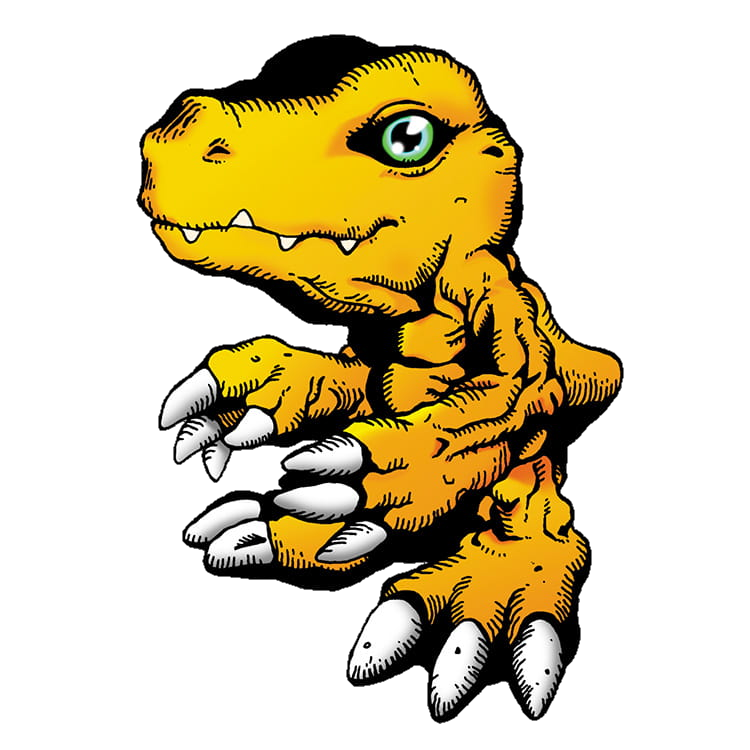
CA: In the anime series specifically, the Digimon Chosen Children only have one Partner Digimon while the Pokemon Trainers have up to six Pokemon each, and this affects both the thematics of the monsters themselves and the screentime that each individually highlighted monster if it is associated with a given human.
CA: I feel like I have sufficiently provided proof that Pokemon and Digimon, as monsters, fulfill different roles in their respective series, and so I will move on to the protagonists of each series.
CA: Oh, also, the Digimon can talk.
CA: For some reason, that always shocks newcomers.
CA: Monsters are somehow tamed by a human, who then directs their attacks against other monsters.
CA: These creatures often have some sort of element or attribute associated with them, such as Fire, Water, Electricity, and Wind, but these don't necessarily have to be the elements used.
CA: For gameplay purposes, there is also often a Neutral element, dealing damage that other elements are neither weak to nor resistant against.
CA: There are other ways that key differences between series can manifest, such as the origin of the monsters that are being tamed.
CA: In series like Monster Hunter, the monsters are a natural part of the world in the same way that animals are a part of our world.
CA: Meanwhile, in the genre progenitor Megami Tensei, the monsters are actually demons from another dimension.
CA: The existence of what we would consider "regular" animals is also variable; sometimes they are present, and sometimes they have been completely replaced by the monsters.
CA: In Pokemon, the eponymous creatures are part of the natural world, seemingly replacing all regular animals, and the protagonists have grown up in a world surrounded by Pokemon their entire lives, so it's not a suprise to see one.
CA: There's an entire Pokemon League built around studying, raising, and battling these creatures, to the point that it's considered common for children as young as ten to become Pokemon Trainers and go on a journey across the country, doing their best to defeat Gym Leaders, the Elite Four, and the Pokemon Champion.
CA: The existence of these social structures and their widespread acceptance show how integrated Pokemon are in human society, which likely could only happen if they were considered part of the natural world.
CA: In Digimon, the monsters are from another dimension, the Digital World, which was accessed when humans created the Internet, also referred to as the Network.
CA: Our protagonists are considered Chosen Children, meaning that they were specifically selected to help defend both the Material World or "real world" and the Digital World from some form of threat.
CA: In addition to the origin of these monsters being different, the monsters themselves are thematically different.
CA: Digimon are thematically representations of "coming of age," while Pokemon are simply partners of the main characters.
CA: This difference is highlighted in the difference between how each series defines their monster's development stages: Digimon (in the sub) are defined as Digitama (Digital Egg), Baby I, Baby II, Child, Adult, Perfect and Ultimate, while Pokemon are simply Stage 1, Stage 2, and Stage 3.
CA: While there are Baby Pokemon which were introduced in Gen 2, these are not a direct representation of the Pokemon Trainer who raises them; they are best understood as a literal baby form of an existing Pokemon.
CA: In the anime series specifically, the Digimon Chosen Children only have one Partner Digimon while the Pokemon Trainers have up to six Pokemon each, and this affects both the thematics of the monsters themselves and the screentime that each individually highlighted monster if it is associated with a given human.
CA: I feel like I have sufficiently provided proof that Pokemon and Digimon, as monsters, fulfill different roles in their respective series, and so I will move on to the protagonists of each series.
CA: Oh, also, the Digimon can talk.
CA: For some reason, that always shocks newcomers.


:: computerAdministrator ::
Protagonist Roster Differences
CA: Just from the images above, you can see a stark difference in the number of protagonists for each series.
CA: The Indigo League arc of Pokemon has three main protagonists: Ash Ketchum, Misty, and Brock.
CA: Digimon Adventure has eight protagonists: Yagami Taichi, Takenoushi Sora, Ishida Yamato, Izumi Koshiro, Tachikawa Mimi, Kido Jo, Takashi Takeru, and Yagami Hikari.
CA: Please note that I'm using the original Japanese names for the Digimon characters; while I said it at the beginning, this is a good opportunity to bring it up again, since while most of the plot points that I will be using carry over between the sub and dub, the names used to refer to these characters will be different if you talk about them in a community discussing the dubbed version.
CA: Anyway, I feel that the difference in roster size alone affects the story-telling mechanics of the respective series: Pokemon focuses more on Ash's journey with Misty and Brock as supporting cast members while Digimon acts more as an ensemble story with each character receiving several spotlight episodes and contributing to important plot points.
CA: Because there is such a large cast of characters, Digimon has several episodes that I like to call "odd pairing" plots, where two characters that wouldn't necessarily hang out with each other organically need to interact with each other for some reason.
CA: You may have experienced this yourself if you needed to carpool with a friend or coworker that you wouldn't otherwise make an effort to spend time with otherwise.
CA: You're part of the same group, not hostile towards one another, and are on friendly terms, but there are other members of the group that you would choose to hang out with first before this person.
CA: I find the exploration of the different pairings of the Digimon characters to be interesting, and while one could make the argument that having a smaller cast of characters would allow Pokemon to have more complex or deep character relationships, I would say that that's not a major focus for the series.
CA: In general, I feel that Pokemon's human characters tend to be fairly static throughout the show, and their interpersonal relationships are relatively shallow in comparison to Digimon.
CA: But that's not what that series is going for; what they want to focus on are the monsters.
CA: The Indigo League arc of Pokemon has three main protagonists: Ash Ketchum, Misty, and Brock.
CA: Digimon Adventure has eight protagonists: Yagami Taichi, Takenoushi Sora, Ishida Yamato, Izumi Koshiro, Tachikawa Mimi, Kido Jo, Takashi Takeru, and Yagami Hikari.
CA: Please note that I'm using the original Japanese names for the Digimon characters; while I said it at the beginning, this is a good opportunity to bring it up again, since while most of the plot points that I will be using carry over between the sub and dub, the names used to refer to these characters will be different if you talk about them in a community discussing the dubbed version.
CA: Anyway, I feel that the difference in roster size alone affects the story-telling mechanics of the respective series: Pokemon focuses more on Ash's journey with Misty and Brock as supporting cast members while Digimon acts more as an ensemble story with each character receiving several spotlight episodes and contributing to important plot points.
CA: Because there is such a large cast of characters, Digimon has several episodes that I like to call "odd pairing" plots, where two characters that wouldn't necessarily hang out with each other organically need to interact with each other for some reason.
CA: You may have experienced this yourself if you needed to carpool with a friend or coworker that you wouldn't otherwise make an effort to spend time with otherwise.
CA: You're part of the same group, not hostile towards one another, and are on friendly terms, but there are other members of the group that you would choose to hang out with first before this person.
CA: I find the exploration of the different pairings of the Digimon characters to be interesting, and while one could make the argument that having a smaller cast of characters would allow Pokemon to have more complex or deep character relationships, I would say that that's not a major focus for the series.
CA: In general, I feel that Pokemon's human characters tend to be fairly static throughout the show, and their interpersonal relationships are relatively shallow in comparison to Digimon.
CA: But that's not what that series is going for; what they want to focus on are the monsters.


:: computerAdministrator ::
Monster Roster Differences
CA: With the cast of monsters that each series focuses on, the roles are reversed; the Pokemon anime
has a much larger set of monsters compared to the Digimon anime.
CA: Each Pokemon Trainer can have up to six Pokemon in their Party, but they can catch many more.
CA: Any additional Pokemon are put in the Pokemon Storage System or, in Ash's case, sent to live at Professor Oak's Laboratory.
CA: In fact, while I have listed six Pokemon for Ash above, he actually caught 30 Tauros in one episode, and all of them live with Professor Oak.
CA: The images above represent the main Party that each Trainer uses during the Indigo League series.
CA: As for Digimon, each Chosen Child has one Partner Digimon each, and they are unable to "tame" other Digimon.
CA: They are able to ally with various Digimon against the forces of evil, but the Digivice that allows the Partner Digimon to evolve doesn't directly affect other Digimon.
CA: This difference in the amount of monsters each human interacts with, along with the fact that they can talk, means that the relationship between the two is a much bigger focus in Digimon than it is in Pokemon.
CA: While there are absolutely stand-out favorite duos in Pokemon, the bond between Trainer and Pokemon is more akin to pet ownership while Digimon is more of a partnership or friendship.
CA: The bonds between each human-monster paring is beneficial for both parties and is sincerely held, but the nature of that relationship looks different for each series.
CA: I feel that this difference comes down to what each series is trying to do and what themes they are both trying to communicate; it's a difference in genre.
CA: Each Pokemon Trainer can have up to six Pokemon in their Party, but they can catch many more.
CA: Any additional Pokemon are put in the Pokemon Storage System or, in Ash's case, sent to live at Professor Oak's Laboratory.
CA: In fact, while I have listed six Pokemon for Ash above, he actually caught 30 Tauros in one episode, and all of them live with Professor Oak.
CA: The images above represent the main Party that each Trainer uses during the Indigo League series.
CA: As for Digimon, each Chosen Child has one Partner Digimon each, and they are unable to "tame" other Digimon.
CA: They are able to ally with various Digimon against the forces of evil, but the Digivice that allows the Partner Digimon to evolve doesn't directly affect other Digimon.
CA: This difference in the amount of monsters each human interacts with, along with the fact that they can talk, means that the relationship between the two is a much bigger focus in Digimon than it is in Pokemon.
CA: While there are absolutely stand-out favorite duos in Pokemon, the bond between Trainer and Pokemon is more akin to pet ownership while Digimon is more of a partnership or friendship.
CA: The bonds between each human-monster paring is beneficial for both parties and is sincerely held, but the nature of that relationship looks different for each series.
CA: I feel that this difference comes down to what each series is trying to do and what themes they are both trying to communicate; it's a difference in genre.
:: computerAdministrator ::
Genre Differences
CA: Yes, both Pokemon: Indigo League and
Digimon Adventure are shonen series with monsters that can evolve, but they are different genres
that happen to have similarities.
CA: I feel that Pokemon is best understood as a sports tournament series while Digimon is a kaiju isekai series.
CA: The biggest difference between these two shows is what the main goal each set of protagonists want to accomplish.
CA: For Pokemon, Ash Ketchum wants to become the Pokemon Champion, Misty wants to become a better Pokemon Trainer so she become the Gym Leader of the Cerulean Gym along with her sisters, and Brock wants to become a Pokemon Breeder.
CA: They travel the Kanto region together, each improving their skills as they encounter new people, places, and Pokemon.
CA: This goal remains relatively steady throughout the series, and each self-contained episode is meant to be another stepping stone towards progress.
CA: For Digimon, the original goal for the Chosen Children is to survive in the new world they have been transported to, and they want to find a way home.
CA: They were transported into the Digital World while they were away at summer camp, except for Hikari, Taichi's little sister, who caught a cold and had to stay home until later events in the show.
CA: The File Island Arc has the group learning about the Digital World, their Partner Digimon, and attempting to find a way home.
CA: The Server Continent Arc is where the group learns about the threat affecting both the Digital World and the real world, and they find key items to help fight the evildoers.
CA: In the Tokyo Arc, the children have found a way back home, but evil Digimon are attacking Tokyo, and so they have to stop them and the threat that is still controlling the rampaging Digimon.
CA: Finally, the Dark Masters Arc has the Chosen Children return to the Digital World, where they have to defeat the Dark Masters, a group of four Digimon that has conquered the Digital World while the Chosen Children were back in Tokyo.
CA: With each arc, the goal updates to a stronger villain, more dire stakes, and the group grows to face the new challenges.
CA: I'll grant you that Ash and friends definitely grow as their journey goes on, but the general goal is always to face more Trainers, Gym Leaders, and eventually the Elite Four to become the Champion.
CA: This isn't a bad thing; it's just a difference between the genres of these series.
CA: If you're looking for a monster battling show that you don't necessarily have to pay super close attention to, I would recommend Pokemon.
CA: If you're looking for a coming-of-age story where there is a lot of character development between the monster fights, I would recommend Digimon.
CA: Both are great at what they do, and I really like them!
CA: I feel that Pokemon is best understood as a sports tournament series while Digimon is a kaiju isekai series.
CA: The biggest difference between these two shows is what the main goal each set of protagonists want to accomplish.
CA: For Pokemon, Ash Ketchum wants to become the Pokemon Champion, Misty wants to become a better Pokemon Trainer so she become the Gym Leader of the Cerulean Gym along with her sisters, and Brock wants to become a Pokemon Breeder.
CA: They travel the Kanto region together, each improving their skills as they encounter new people, places, and Pokemon.
CA: This goal remains relatively steady throughout the series, and each self-contained episode is meant to be another stepping stone towards progress.
CA: For Digimon, the original goal for the Chosen Children is to survive in the new world they have been transported to, and they want to find a way home.
CA: They were transported into the Digital World while they were away at summer camp, except for Hikari, Taichi's little sister, who caught a cold and had to stay home until later events in the show.
CA: The File Island Arc has the group learning about the Digital World, their Partner Digimon, and attempting to find a way home.
CA: The Server Continent Arc is where the group learns about the threat affecting both the Digital World and the real world, and they find key items to help fight the evildoers.
CA: In the Tokyo Arc, the children have found a way back home, but evil Digimon are attacking Tokyo, and so they have to stop them and the threat that is still controlling the rampaging Digimon.
CA: Finally, the Dark Masters Arc has the Chosen Children return to the Digital World, where they have to defeat the Dark Masters, a group of four Digimon that has conquered the Digital World while the Chosen Children were back in Tokyo.
CA: With each arc, the goal updates to a stronger villain, more dire stakes, and the group grows to face the new challenges.
CA: I'll grant you that Ash and friends definitely grow as their journey goes on, but the general goal is always to face more Trainers, Gym Leaders, and eventually the Elite Four to become the Champion.
CA: This isn't a bad thing; it's just a difference between the genres of these series.
CA: If you're looking for a monster battling show that you don't necessarily have to pay super close attention to, I would recommend Pokemon.
CA: If you're looking for a coming-of-age story where there is a lot of character development between the monster fights, I would recommend Digimon.
CA: Both are great at what they do, and I really like them!
:: computerAdministrator ::
Conclusion
CA: I feel like many people look at Pokemon and Digimon and assume that they're going to get a similar experience from both, but I feel like that leads to
disappointment when you don't get the results you expected.
CA: Instead, I would recommend starting with an open mind and tackling the series on its own terms without trying to wrangle it into a box that it doesn't fit in.
CA: I have been a Pokemon fan since I was very little, and when I first tried Digimon as an adult, I went into it with a great deal of assumptions that affected my viewing experience.
CA: Once I let go of those assumptions and met Digimon where it was at, I found that I liked the story even more than Pokemon, and I have become a big fan of different parts of the franchise as well.
CA: If anything of what I've been saying appeals to you, I highly recommend trying it!
CA: Instead, I would recommend starting with an open mind and tackling the series on its own terms without trying to wrangle it into a box that it doesn't fit in.
CA: I have been a Pokemon fan since I was very little, and when I first tried Digimon as an adult, I went into it with a great deal of assumptions that affected my viewing experience.
CA: Once I let go of those assumptions and met Digimon where it was at, I found that I liked the story even more than Pokemon, and I have become a big fan of different parts of the franchise as well.
CA: If anything of what I've been saying appeals to you, I highly recommend trying it!